Rosh Hashanah brings family and friends together around a table filled with tradition, reflection, and wishes for a sweet new year. The best kosher wine for the occasion should meet your guests’ dietary needs while complementing the foods, flavors, and celebratory spirit of the meal.
There is no single bottle that suits every Rosh Hashanah table. A semi-sweet white may brighten apples and honey, a fruit-forward red can stand beside brisket, and a rosé or sparkling option can carry the celebration from welcome toast to dessert. Offering more than one style lets guests choose the pour they enjoy most.
Why Sweet Flavors Matter at Rosh Hashanah
Rosh Hashanah meals often feature foods that express hope for a sweet year ahead. Apples dipped in honey are among the most familiar examples, but sweetness may also appear in round challah, glazed poultry, roasted vegetables, dried fruit, honey cake, and other family recipes. Wine does not need to imitate every sweet note, yet a fruit-forward or semi-sweet style can feel harmonious with the overall menu.
Balance still matters. A refreshing wine with lively fruit, gentle bubbles, or enough acidity can keep the meal from feeling heavy. The goal is not to make every course taste sweeter; it is to choose a wine that supports the symbolic foods while remaining enjoyable from one bite to the next.
What to Look for in Rosh Hashanah Wine
First, confirm that each wine is certified kosher by checking the exact bottle for a recognized certification symbol. Kosher certification concerns ingredients, equipment, handling, and supervision during production; it does not indicate whether the wine will taste dry, sweet, red, white, or sparkling. If your household or host follows additional standards, verify those requirements before purchasing.
Then consider the shape of your celebration:
- Menu: Match the wine’s weight and sweetness to the dishes being served.
- Guest preferences: Include an approachable option for people who prefer fruit-forward wine.
- Serving moment: Decide whether the wine is for a welcome toast, dinner, dessert, or all three.
- Temperature: Plan refrigerator or ice-bucket space for wines that are best served chilled.
Best Kosher Wine Styles for the Holiday Table
Semi-Sweet White Wine
A chilled, semi-sweet white is a versatile way to begin the meal. Its bright fruit can echo the sweetness of apples and honey without feeling heavy, while refreshing acidity and gentle bubbles can balance rich challah or roasted chicken. Peach-forward wine is especially inviting for guests who prefer soft, familiar flavors.
Fruit-Forward Red Wine
For brisket, roasted vegetables, or savory dishes with a touch of sweetness, consider a fruit-forward kosher red. Berry flavors can complement caramelized edges, glazes, and dried-fruit accents. A semi-sweet red is also an approachable alternative for guests who find dry, tannic reds too intense.
Rosé Wine
Rosé can bridge different courses and preferences. Its refreshing character works as an aperitif, while red-fruit notes can pair with poultry, salads, grain dishes, and fruit-based sides. A pomegranate-flavored rosé feels especially festive alongside a colorful holiday spread.
Semi-Sparkling Wine
Gentle bubbles instantly signal celebration. Semi-sparkling wine can welcome guests, accompany lighter dishes, or refresh the palate between bites. Because Stella Rosa’s kosher selections combine fruit-forward flavor with a soft sparkle, they can serve more than one role without making the wine service feel complicated.
Stella Rosa Kosher Wines for Rosh Hashanah
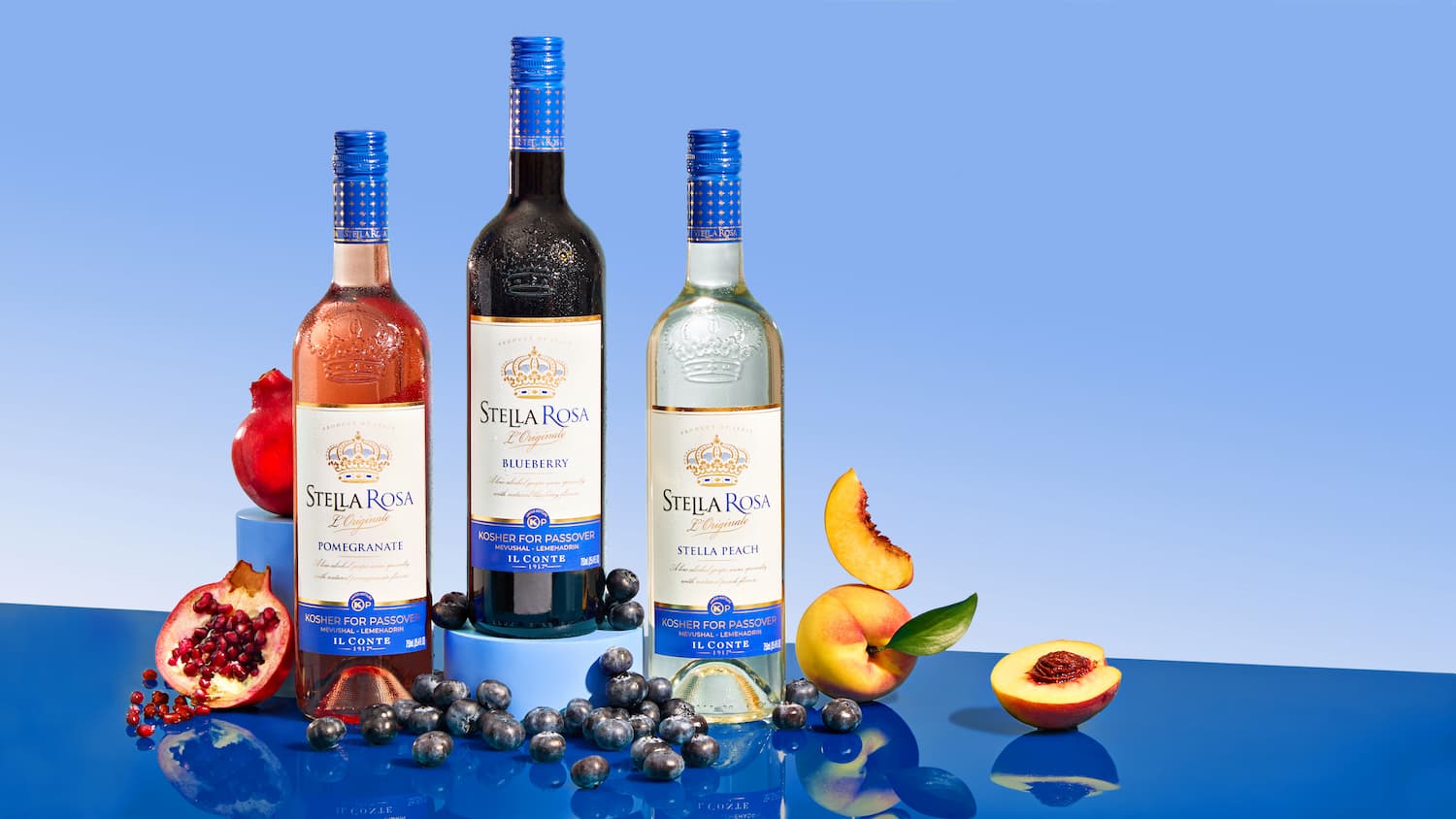
Stella Rosa offers three kosher wines with distinct fruit profiles. Each is made in Italy, semi-sweet, semi-sparkling, and best served chilled. Choose one based on your menu or offer two or three so guests can explore different flavors.
- Stella Rosa Kosher Peach
Stella Rosa Kosher Peach brings ripe peach and honey notes to a semi-sweet white wine made with Moscato grapes. Pour it with apples and honey, challah, herb-roasted chicken, or fruit-forward desserts. Its light profile also makes it a welcoming first glass. - Stella Rosa Kosher Blueberry
Stella Rosa Kosher Blueberry offers juicy blueberry flavor in a semi-sweet red wine. Try it with braised brisket, roasted root vegetables, or dishes that include dried fruit. Later in the meal, its berry character can carry through to chocolate cake or other rich desserts. - Stella Rosa Kosher Pomegranate
Stella Rosa Kosher Pomegranate combines ripe pomegranate flavor with the refreshing style of rosé. It can complement roast chicken, fresh salads, rice or grain dishes, and berry desserts. Its vibrant color also looks right at home on a festive table.
Pairing Wine with Traditional Rosh Hashanah Foods
Rosh Hashanah menus often bring sweet and savory flavors together, so pairing does not need to follow rigid rules. Start with the dominant flavor of each dish and choose a wine with equal or slightly greater perceived sweetness.
- Apples and honey: Choose a peach-forward white or refreshing rosé.
- Round challah: Try a lightly sparkling white to lift the bread’s richness.
- Brisket: Reach for a berry-forward red that can meet savory, slow-cooked flavor.
- Roasted chicken: Pair with a semi-sweet white or pomegranate rosé.
- Desserts: Match fruit desserts with Peach or Pomegranate and chocolate with Blueberry.
Apples, Honey, and Round Challah
Apples and honey call for a wine that feels bright rather than weighty. A peach-forward white can echo the fruit and honey notes, while a chilled pomegranate rosé supplies contrast through tart red-fruit character. With round challah, gentle bubbles can refresh the palate after the bread’s soft, rich texture. If the challah includes raisins or another sweet accent, a semi-sweet wine can continue that flavor thread without requiring a separate pairing.
Fish and Lighter Starters
For gefilte fish, simple baked fish, salads, or vegetable starters, begin with the lightest wine on the table. A chilled semi-sweet white or rosé is less likely to overwhelm delicate flavors. Consider the sauce as well as the main ingredient: a sweeter glaze may welcome Peach, while herbs, greens, or pomegranate seeds can point toward Pomegranate.
Roasted Chicken and Savory Sides
Roasted chicken can work with white, rosé, or a lighter fruit-forward red, which makes it one of the most flexible dishes on the menu. Choose according to the seasoning. Peach can complement herbs and a honey glaze, Pomegranate can brighten poultry served with salads or grains, and Blueberry can suit a darker glaze or sides made with dried fruit. Roasted carrots, squash, and sweet potatoes often follow the same logic.
Brisket and Slow-Cooked Main Courses
Brisket usually calls for the deepest fruit profile in the lineup. A berry-forward red can stand up to slow-cooked beef, caramelized edges, tomato-based sauce, or a sweet-and-savory glaze. Serve the wine chilled but not ice-cold, allowing a few minutes in the glass for its fruit character to become expressive. Guests who prefer white or rosé should still drink what they enjoy; pairing guidance is an invitation, not a rule.
Honey Cake, Fruit Desserts, and Chocolate
For dessert, avoid a wine that tastes noticeably less sweet than the food. Peach is a natural partner for apple desserts, fruit tarts, or honey cake. Pomegranate can complement berry desserts and lighter cheesecakes, while Blueberry can meet chocolate cake, brownies, or desserts with a berry sauce. Small pours are often enough after a full meal, particularly when guests have enjoyed wine with earlier courses.
Planning for Different Celebration Styles
A small family dinner may need only one versatile bottle, especially if everyone shares similar tastes. Peach or Pomegranate can move easily from symbolic foods through poultry and dessert. For a larger gathering, offering a white, red, and rosé gives guests clear choices and makes it easier to cover multiple courses.
At a potluck, ask the host what wines are already planned and which dishes guests are bringing. A chilled bottle can be useful when refrigerator space and timing are confirmed in advance. For a dessert gathering or afternoon open house, focus on lighter pours, fruit-forward pairings, and an attractive self-serve station with labels visible.
If children, nondrinkers, or guests avoiding alcohol will attend, provide festive nonalcoholic choices in equally welcoming glassware. Inclusion is part of good hosting, and no guest should feel that the celebratory toast depends on drinking wine.
Choose Wine by Guest Preference
A menu pairing is useful only if people enjoy the wine in their glasses. For guests who like lighter, floral, or peach flavors, begin with Kosher Peach. Offer Kosher Pomegranate to rosé drinkers and people who enjoy brighter red-fruit notes. Kosher Blueberry may appeal most to guests seeking a deeper berry profile or a red wine for the main course. When preferences are unknown, provide two contrasting bottles and let guests sample a small pour before choosing.
Bringing Kosher Wine as a Rosh Hashanah Host Gift
When bringing wine to someone else’s home, ask whether the host has a preferred certification or additional handling requirements. Choose a sealed bottle, leave it sealed when you arrive, and do not expect it to be opened during the meal; the host may already have a serving plan. A gift bag or simple note can make the gesture feel finished without hiding the label the host may want to inspect.
How Much Wine Should You Buy?
A standard 750-milliliter bottle provides about five 5-ounce servings. Estimate the number of adult guests who plan to drink wine, the length of the gathering, and whether other beverages will be available. Buying more than one style is often more useful than buying many bottles of a single wine, especially when the meal includes several courses.
Chill Stella Rosa kosher wines before guests arrive and keep an ice bucket ready if bottles will remain on the table. Open one bottle at a time so the remaining wines stay fresh and sparkling until needed. Always encourage guests to celebrate responsibly.
Plan a Simple Serving Order
If you are offering several wines, begin with the lightest style and move toward deeper fruit flavors. Peach can welcome guests or accompany the opening courses, Pomegranate can bridge salads and poultry, and Blueberry can arrive with brisket or dessert. This progression is a suggestion, not a rule; guest preference should always lead the way.
Set each bottle where people can see the label, and consider placing a small card beside it with the flavor and suggested pairing. That simple touch helps guests choose without interrupting the flow of the meal. Keep nonalcoholic options readily available as well so every person at the gathering has something festive to enjoy.
Rosh Hashanah Wine FAQs
Does Rosh Hashanah wine have to be sweet?
No. Many hosts enjoy semi-sweet or fruit-forward wines because they complement the holiday’s symbolic sweet foods, but kosher wine is available in many styles. The right choice is one that meets the required certification and suits the menu and guests.
Can sparkling wine be served at Rosh Hashanah?
Yes. Bubbles can make a welcome toast feel festive and refresh the palate throughout the meal. Confirm that the bottle is kosher and serve it at the temperature recommended for that wine.
Should every course have a different wine?
Not at all. One versatile wine can accompany several courses, particularly at a smaller gathering. For a larger dinner, two or three contrasting styles usually provide enough variety without making service complicated.
What is the best Stella Rosa kosher wine for brisket?
Stella Rosa Kosher Blueberry is the most natural starting point because its berry-forward red-wine profile can complement brisket’s savory depth and sweet accents. Personal preference and the sauce used in the recipe should guide the final choice.
Raise a Glass to a Sweet New Year
The best Rosh Hashanah wine is one that respects the occasion, fits the menu, and makes guests feel welcome. Stella Rosa Kosher Peach, Kosher Blueberry, and Kosher Pomegranate offer approachable ways to cover white, red, and rosé preferences while adding fruit flavor and gentle sparkle to the celebration.
Choose the bottles that suit your table, confirm the kosher certification on each one, and serve them well chilled. Then gather the people you love and toast to a joyful, sweet new year. Find Stella Rosa wines near you.